FinOps for AI: why 2026 is the year cost governance becomes a board issue
FinOps for AI: why 2026 is the year cost governance becomes a board issue
AI is no longer a side project.
Across most organisations, it has moved from experimentation to delivery: copilots, agents, analytics, model inference, retrieval pipelines, and data-heavy automation are now part of mainstream technology planning. The commercial upside is clear, but so is the financial complexity. AI spend behaves differently to traditional cloud spend, and that is why FinOps for AI has become such a live issue in 2026.
The FinOps Foundation’s State of FinOps 2026 summary says this directly: FinOps for AI is now the top forward-looking priority, and AI cost management is the number one skillset teams need to develop. It also reports that 98% of respondents are now managing AI spend, up sharply from previous years.
That is a major shift.
It means AI cost governance is no longer a niche concern for specialist teams. It is becoming a board-level issue because it sits at the point where innovation, forecasting, accountability and risk all meet.
Why AI spend feels different
Traditional cloud cost management is already hard enough. Teams are dealing with shared infrastructure, variable usage, tagging gaps, and the usual debates between engineering, finance and the business.
AI adds a new layer of difficulty.
The FinOps Foundation’s guidance on FinOps for AI highlights the core reasons: cost complexity, faster development cycles, spend unpredictability, and the need for stronger policy and governance around allocation, forecasting and optimisation.
In practice, organisations feel that in four ways:
1) AI demand is volatile
A proof of concept can become a production workload very quickly. Usage can sit quietly for days, then spike when a new feature launches, a team rolls out a copilot, or a workflow gets automated at scale.
2) Costs are harder to explain
AI costs are often spread across models, tokens, API calls, GPUs, orchestration layers, vector databases, storage, logging and network movement. That makes attribution more difficult than a simple virtual machine or SaaS licence line item.
3) The pace of change is faster
AI teams test models, prompts, pipelines and service combinations quickly. That speed is good for innovation, but it can outrun governance if cost visibility only arrives after the month-end bill.
4) Finance and engineering are often looking at different versions of reality
Engineering sees experimentation and delivery. Finance sees volatility and forecast pressure. Without a shared model for value, AI spend quickly becomes a tension point.
Why this is now a board issue
This matters more in 2026 because cloud and AI are no longer optional strategic layers. Gartner forecast worldwide public cloud end-user spending at $723.4 billion in 2025, up from $595.7 billion in 2024, driven in part by AI and application modernisation.
At the same time, the FinOps discipline itself is expanding. The FinOps Foundation updated its mission and framework to reflect a broader “technology value” focus, not just public cloud. Its 2026 framework update adds Executive Strategy Alignment as a capability, explicitly linking technology investment decisions to organisational priorities and trade-offs.
That is why this has moved into board territory.
The question is no longer just: How much are we spending on AI?
It is now:
- What business value is that spend meant to create?
- Which workloads are worth scaling?
- Where is the volatility?
- What controls are in place before spend gets out of shape?
- Who owns the decision when cost and performance trade-offs appear?
These are leadership questions, not just engineering questions.
What good FinOps for AI looks like
The good news is that organisations do not need a completely new discipline to manage AI. The FinOps Foundation is clear that AI introduces new cost and usage challenges, but the same core FinOps approach still applies.
What changes is the operating model.
1) Allocation needs to be trustworthy
If AI spend cannot be mapped to a product, service, business unit, team or initiative, it cannot be governed properly. This means tagging, ownership and cost allocation become foundational.
2) Forecasting needs to handle variability
Static annual budgeting is a poor fit for AI. You need a model that allows for experimentation, pilot-to-production growth, and sudden changes in inference demand.
3) Anomaly management becomes essential
AI can create sudden cost spikes. Strong anomaly detection and response processes help teams identify unusual spend patterns before they become financial surprises.
4) Value must be measured alongside cost
High-performing organisations do not ask only “what did this AI workload cost?” They also ask “what did it improve?” That could mean reduced handling time, faster throughput, lower support demand, higher accuracy, or improved customer experience.
5) Finance and engineering need a common language
This is where FinOps matters most. It gives finance, engineering and leadership a shared rhythm for making decisions based on cost, usage and value, rather than forcing one side to react to the other after the fact.
Altiatech perspective
At Altiatech, we see this becoming one of the most important governance challenges for organisations scaling AI responsibly.
The issue is not whether AI is worth investing in. In many cases, it clearly is.
The issue is whether the organisation can scale AI with enough visibility, control and accountability to keep leadership confident. That is where many firms still struggle. The technology moves quickly, but the operating model behind it often lags.
The organisations that get ahead in 2026 will not necessarily be the ones spending the most on AI. They will be the ones with the clearest grip on:
- where AI spend is happening
- what drives it
- what value it is meant to create
- and what guardrails are in place when usage scales
That is what makes FinOps for AI a board issue. It is not a cost-cutting exercise. It is a decision-making discipline.
How Altiatech can help
Altiatech helps organisations turn AI cost governance into a practical operating model, not just a reporting exercise.
Typical support includes:
- AI spend baseline and visibility review: mapping current AI-related cloud and platform costs to services, environments, teams and owners.
- Allocation and tagging model: creating a structure that supports clear attribution, showback and future chargeback if needed.
- Anomaly management design: setting thresholds, alerts and response playbooks so AI spend spikes are identified and addressed early.
- Forecasting and guardrails: putting in place budgets, approval points and usage controls that support innovation without losing predictability.
- Executive reporting: translating AI spend into board-ready language that connects cost, risk and business value.
- FinOps operating model support: aligning engineering, finance and leadership around a shared cadence for AI cost decisions.
A practical starting point is a short AI FinOps assessment: baseline current spend, identify the main cost drivers, assess allocation and reporting quality, and define the first set of governance improvements.
Call to action
Want to discuss your requirement?
Speak to Altiatech about your next steps. Email
innovate@altiatech.com or call
0330 332 5842 (Mon–Fri, 9am–5:30pm).
Contact us: https://www.altiatech.com/contact
Ready to move from ideas to delivery?
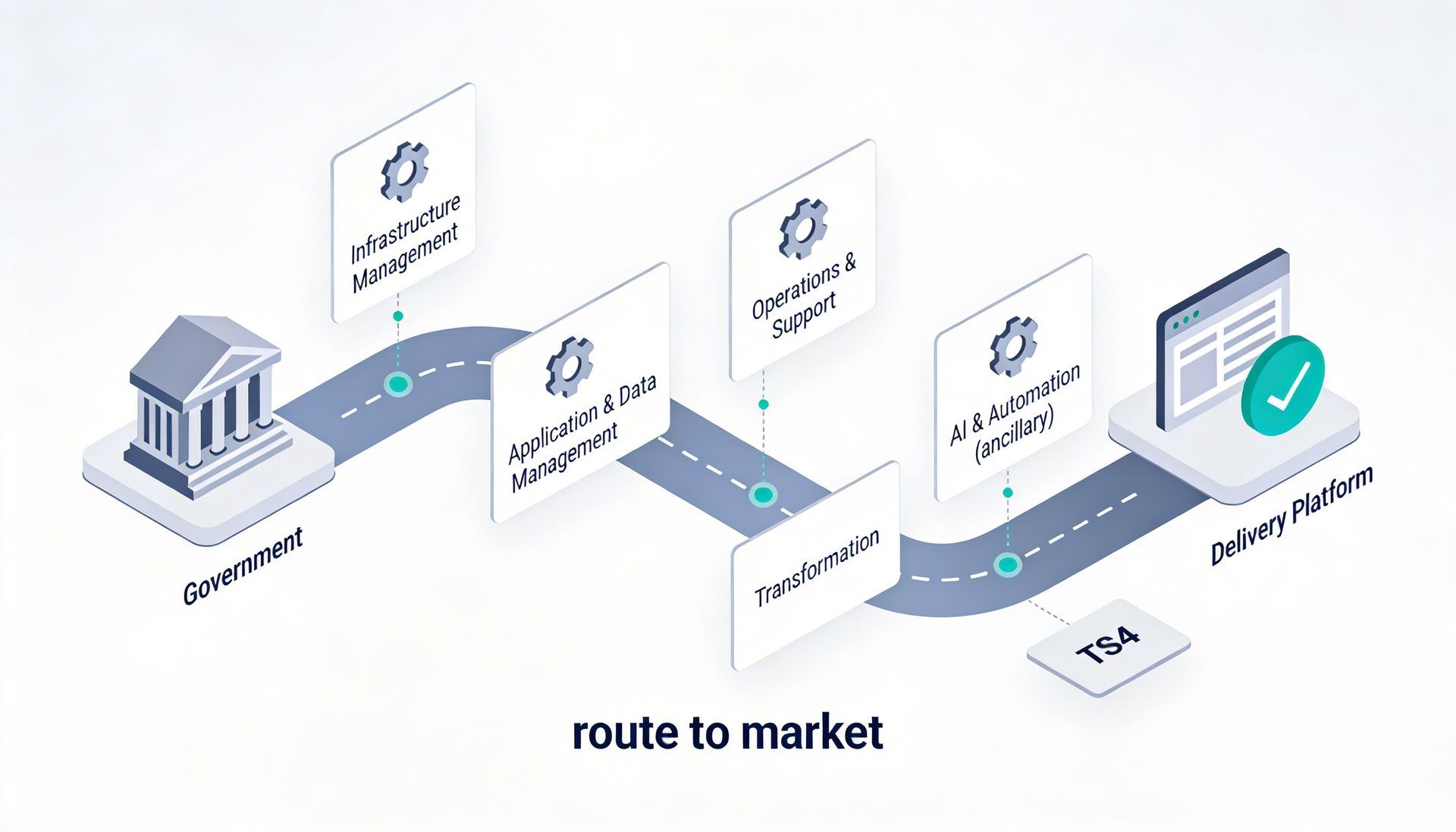
Whether you’re planning a cloud change, security uplift, cost governance initiative or a digital delivery programme, we can help you shape the scope and the right route to market.
Email:
innovate@altiatech.com or call
0330 332 5842 (Mon–Fri, 9am–5:30pm).
Main contact page: https://www.altiatech.com/contact